
HMU Logo
HELLENIC MEDITERRANEAN
UNIVERSITY
English

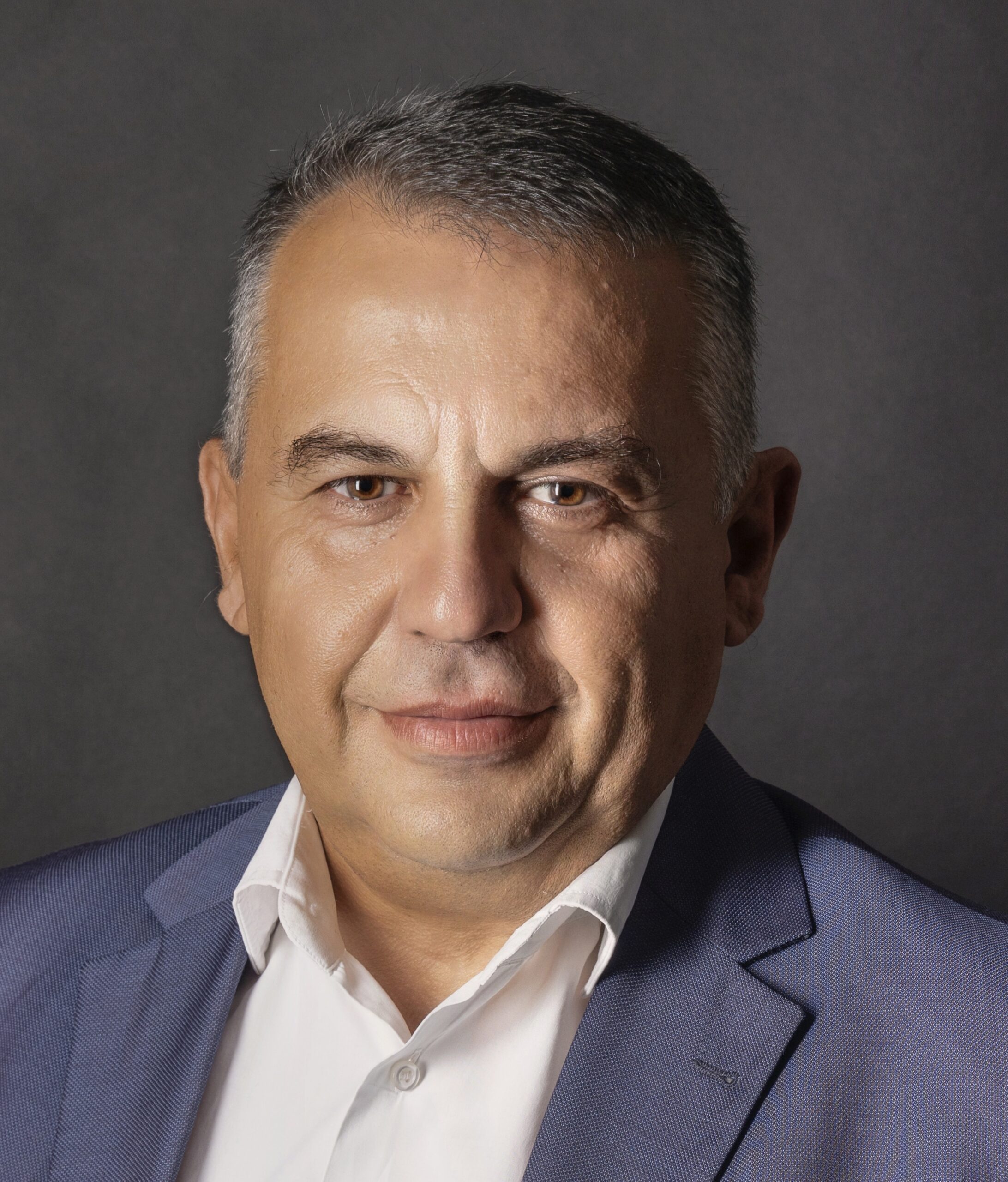
HMU Rector, Professor Nektarios Papadogiannis, at the TICPA 2026 International Conference in Romania – University–Society Relations at the Forefront

The Rector of the Hellenic Mediterranean University (HMU), Professor Nektarios Papadogiannis, participated in the Transylvanian International Conference in Public Administration (TICPA 2026), held from 1 to 3 October 2026 in Cluj-Napoca, Romania. The conference was organised by the Department of Public Administration and Management of the Faculty of Political, Administrative and Communication Sciences (FSPAC) at Babeș-Bolyai University.

Founded in 1995, the Faculty has played an important role in educating professionals in Romania’s public administration and political life. Graduates and members of its academic community have gone on to hold senior government and administrative positions, including ministers, deputy ministers and officials in the Prime Minister’s Chancellery, contributing to the modernisation of public administration and the country’s reform process over recent decades.

The central theme of this year’s conference was “Public Administration and the Future of Democracy: Institutions, Innovation, and Public Value”, bringing together academics, researchers and public administration professionals from universities and organisations in different countries.

The Rector of HMU took part in the official opening of the conference as a representative of the international academic community, alongside representatives of universities and international public administration organisations. In his opening remarks, he placed particular emphasis on the importance of long-term cooperation between universities, local government and society, highlighting the example of Cluj-Napoca and Babeș-Bolyai University as a case in which close links between the city, its universities and its research ecosystem have made a significant contribution to shaping a model of urban and regional development. The effective use of academic knowledge, research, innovation and creativity has contributed to the transformation of the city into a dynamic hub for technology, start-ups and culture, while also creating conditions capable of retaining and attracting young scientific talent.

He made particular reference to the previous cooperation developed between Rethymno and Cluj-Napoca, with the participation of the Municipality of Rethymno, the University of Crete, the Municipality of Cluj-Napoca and Babeș-Bolyai University, as well as representatives of local government, the academic community and local society. As he noted, this experience reinforced the conviction that universities should not merely be located in cities and regions, but should actively contribute to shaping their development trajectories.

As part of the conference, Professor Nektarios Papadogiannis also participated in the special panel “University and Community Relation”, together with Emil Boc, former Prime Minister of Romania and current Mayor of Cluj-Napoca, a graduate of Babeș-Bolyai University and Professor at the Faculty of Political, Administrative and Communication Sciences (FSPAC), as well as representatives of universities from the United States, Hungary and Germany. The panel was moderated by Professor John Diamond of Edge Hill University.

In his contribution, the Rector of HMU argued that a modern university should not function merely as an institution located within a region, but should form part of that region’s own capacity to understand its challenges, plan its future and create public value. In this context, he presented Crete as a particularly dynamic regional ecosystem in which universities, research institutions, the Region, municipalities, businesses and society can combine their capacities to address complex contemporary challenges.

The Rector of the Hellenic Mediterranean University, Professor Nektarios Papadogiannis, underlined that the relationship between the University and society should not be limited to the “transfer of knowledge”, but should evolve towards the co-creation of public value, through permanent institutional partnerships rather than solely through individual projects or programmes. In this context, he highlighted Crete as a particularly strong regional knowledge ecosystem, bringing together universities and research institutions, the Region of Crete, the Regional Union of Municipalities of Crete and municipalities that have already developed significant initiatives in key sectors. He stressed, however, that making fuller use of this potential requires more stable and systematic mechanisms of cooperation, through which universities and research institutions can contribute to the planning and addressing of the island’s strategic challenges.

In his intervention, he referred, among other areas, to fields in which such cooperation could be further strengthened, including climate change and environmental resilience, energy, digital transformation and artificial intelligence, health, education, tourism, agriculture and the agri-food sector, the circular economy and public administration itself. A central point of his contribution was that Crete has considerable potential for further development, provided that the scientific knowledge and research capacity of its universities are more firmly connected with development planning and with the actual needs of the Region, municipalities and local communities.

He also placed particular emphasis on student participation in this process, noting that students should not only learn about society, but should also have the opportunity to work on real-life problems and needs. At the same time, he highlighted the importance of measuring the public value generated by each collaboration, as well as of drawing on international knowledge to address local challenges.

Concluding his contribution, the Rector of HMU stressed that the university of the future must be both internationally connected and deeply rooted in its local environment, turning knowledge into a meaningful tool for social, institutional and developmental progress. As he characteristically noted, the goal is not simply for the University to be “connected to society”, but to contribute to society’s own capacity to understand its needs, plan its future more effectively and transform itself.

The participation of the Rector of HMU, Professor Nektarios Papadogiannis, in TICPA 2026 highlighted the role that modern universities can play as stable partners of society and public administration, contributing knowledge, research and evidence-based proposals to the response to complex challenges at international, regional and local levels.

More information about the conference:

https://apubb.ro/intconf/