




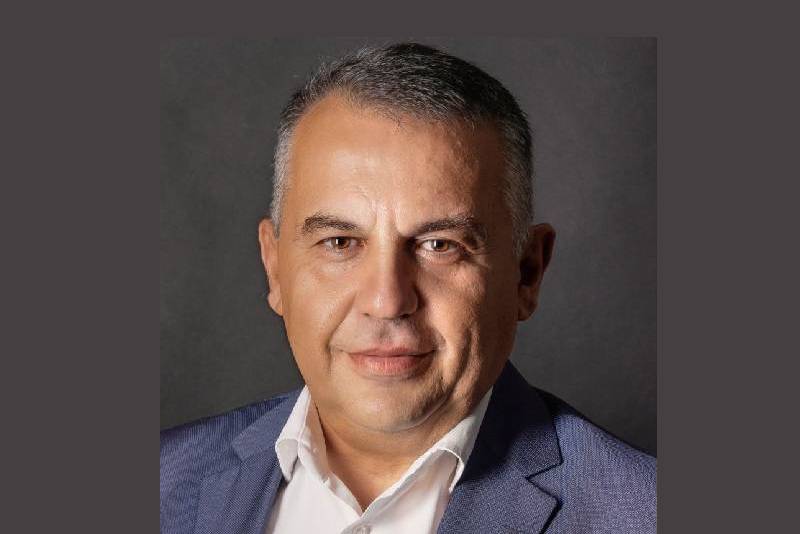
Professor Nektarios Papadogiannis was elected Rector of the Hellenic Mediterranean University (HMU) following an electronic vote held among the members of the HMU Council of Administration through the special “ZEUS” information system on Thursday, 11 June 2026. The HMU Council of Administration is composed of the following members:
- Nektarios Papadogiannis, son of Andreas, Professor at the Department of Music Technology and Acoustics, School of Music and Audiovisual Technologies, Internal Member.
- Nikolaos Vidakis, son of Emmanouil, Professor at the Department of Electrical and Computer Engineering, School of Engineering, Internal Member.
- Athanasios Malamos, son of Georgios, Professor at the Department of Electrical and Computer Engineering, School of Engineering, Internal Member.
- Anastasia Tampakaki, daughter of Pavlos, Professor at the Department of Agriculture, School of Agricultural Sciences, Internal Member.
- Christos Floros, son of Vasileios, Professor at the Department of Accounting and Finance, School of Management and Economics, Internal Member.
- Evridiki Patelarou, daughter of Emmanouil, Professor at the Department of Nursing, School of Health Sciences, Internal Member.
- Georgios Panagiotakis, son of Stylianos, Emeritus Professor at the University of Patras and former Rector, External Member.
- Nikolaos Tzirakis, son of Iosif, Professor at the University of Illinois at Urbana-Champaign, USA, External Member.
- Konstantinos Sarris, son of Dimitrios, Professor at the University of Toronto, Canada, External Member.
- Andronikos Mavromoustakos, son of Antonios, Emeritus Professor at the University of Arkansas, USA, External Member.
- Georgios Karatasios, son of Dimitrios, Doctor of Mathematics and former Regional Director of Education of Central Macedonia, External Member.
Nektarios A. Papadogiannis is Professor of Physics at the Department of Music Technology and Acoustics of HMU and Research Director at the Institute of Plasma Physics & Lasers of the University Research and Innovation Centre (URIC). He graduated from the Department of Physics of the University of Crete in 1990 and holds a two-year Master’s Degree in Atomic and Molecular Physics, as well as a PhD from the same Department, in collaboration with FORTH and Claude Bernard University Lyon 1, awarded in 1996. He has worked as a postdoctoral researcher at the Institute of Electronic Structure and Laser of FORTH, at the Max Planck Institute of Quantum Optics in Munich, and at the Laboratoire d’Optique Appliquée of École Polytechnique in Paris.
Before his election to the Technological Educational Institute of Crete in 2003 and to HMU in 2019, he had been elected Lecturer at the School of Engineering of Aristotle University of Thessaloniki in 2000 and Special Functional Scientist, Grade B, at FORTH in 2001.
He has published a significant number of scientific papers in leading international journals in the fields of Natural Sciences and Technology, including Science, Nature, Physical Review Letters and others. His contribution to ultrafast optical and acoustic physics and to secondary radiation generation has been recognised and awarded both nationally, with the first national excellence award in 2012 in the Natural Sciences for laser-driven inertial fusion, and internationally, through awards and references in columns of leading scientific journals, such as Nature’s “News and Views” section, for his research in the field of attophysics. He has extensive teaching experience at the University of Crete, in the Department of Physics and the Department of Primary Education, as well as at HMU, in the Department of Music Technology and Acoustics and the Department of Electronic Engineering, at both undergraduate and postgraduate level. He has supervised and co-supervised dozens of undergraduate and postgraduate theses, as well as 11 doctoral dissertations.
In terms of administration, he served for 12 years as elected Chair of his Department, as an elected member of the Council of Administration of the Technological Educational Institute of Crete from 2011 to 2015, and as elected Vice-Rector for Administrative Affairs from 2017 to 2022, initially at the Technological Educational Institute of Crete and subsequently at HMU. Over the past two and a half years, he has also served as elected unpaid Deputy Mayor for Education, Youth, Lifelong Learning and Digital Transformation at the Municipality of Rethymno.
In the proposal outlining the development plan of HMU for the period 2026–2030, which Professor Nektarios Papadogiannis presented to the members of the academic community, as provided for in Article 11 of Law 4957/2022, he underlined that he envisions a University that produces internationally competitive knowledge, transforms research into innovation, and actively shapes the academic and social environment rather than merely following it. At the core of his plan, he places:
A) A high-quality academic policy across all campuses and all fields of knowledge, with reinforcement of human resources, personalised teaching to support students in mixed groups, continuous reform of study programmes based on international standards, utilisation of Artificial Intelligence in education, and development of international undergraduate and postgraduate programmes.
B) Research excellence and innovation, through the transition to an integrated institutional research ecosystem, digital management, the possibility of internal funding for young scientists, assertive pursuit of European and international funding, including Horizon, ERC and Marie Curie programmes, development of spin-offs and patents, and upgrading of the Institutes of URIC.
C) Modern administrative operation, with full digital transformation, simplification of procedures, merit-based appointments to positions of responsibility, publication of a new Internal Regulation and establishment of an “internal transparency” mechanism for full transparency, as well as the establishment of University Clinics in the Departments of the School of Health Sciences and their connection with the National Health System.
D) Internationalisation with a clear footprint, making use of the Institution’s participation in the European alliances ATHENA and HEROES European University, with the aim of establishing a strategic presence in the Southeastern Mediterranean and the Balkans, developing new English-taught study programmes and institutionalising the HMU International School.
E) Quality of daily life and student welfare, through decentralised financial management, equal access to student housing across all campuses, joint utilisation of student residences with other Universities, and strengthening of counselling and psychological support structures for students.
F) Building infrastructure and energy autonomy, through the preparation of a ten-year Master Plan for all academic campuses and hubs — Heraklion, Rethymno, Chania, Agios Nikolaos and Sitia — new landmark buildings for the Schools, and the transformation of the University Campus and regional structures into a living laboratory of green transition and bioclimatic standards.
G) Close cooperation with the other Universities and Research Structures of Crete, active connection with society and the economy, through the development of a university innovation ecosystem, business incubators, co-management of student housing, and strategic partnerships with local government, the academic community and the productive sector.
At a forthcoming meeting of the HMU Council of Administration, following the publication of the declaratory act confirming the election of the Rector in the Government Gazette, the Vice-Rectors will be appointed, together with their areas of responsibility and competences. The term of office of the Rector, Professor Nektarios Papadogiannis, and of the HMU Council of Administration expires on 31 August 2030.
